
Understanding How Home BP Monitoring Helps Manage Hypertension
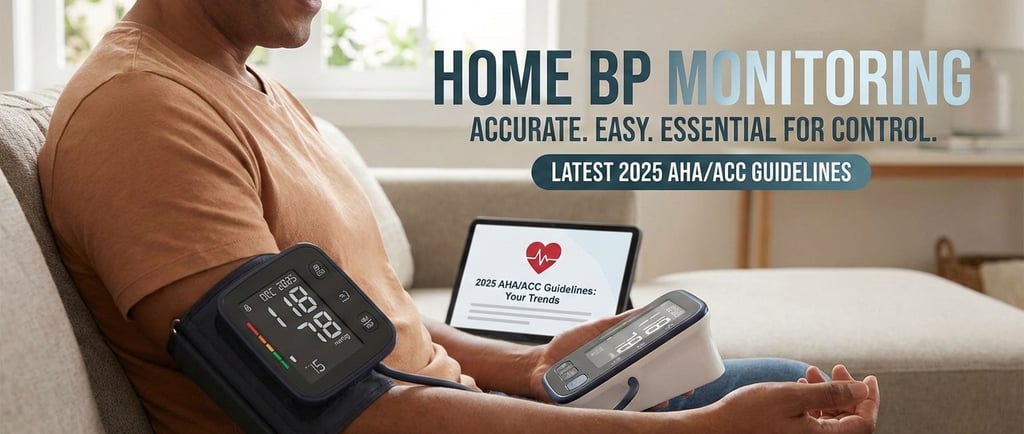
Home blood pressure monitoring is accurate, easy, and essential for hypertension control. Learn how to measure BP at home correctly, avoid white coat hypertension, and understand the latest 2025 AHA/ACC blood pressure guidelines.
💓 The Silent Conversation: Why Your Heart Needs You to Listen
As a doctor, I often tell my patients that blood pressure is like the "background noise" of your body—you don’t usually notice it until it becomes too loud.
The challenge with hypertension (high blood pressure) is its nickname: the "Silent Killer." You can walk around for years feeling perfectly fine, even while high pressure is quietly putting a strain on your heart, your brain, and your kidneys. It doesn’t usually cause a headache or a warning sign until the damage is already done.
But here is the good news: while it is silent, it isn't invisible.
Monitoring and managing your blood pressure is one of the most powerful ways to take control of your long-term health. It’s about more than just numbers on a screen; it’s about preventing strokes, avoiding heart attacks, and ensuring you’re around for the moments that matter most.
In this post, I want to show you why your home monitor is your most trusted ally and how we can work together to keep that "background noise" exactly where it belongs—quiet and controlled.
A common question patients ask is:
“Doctor, is my home BP machine reliable? Should I really trust the readings I get at home?”
Let’s unpack this scientifically — and see how home BP monitoring can become your best partner in managing hypertension.
🧬 The Science Behind Blood Pressure Measurement
Blood pressure represents the force your blood exerts against the walls of your arteries.
It has two components:
Systolic BP (SBP): the upper number, indicating pressure during heartbeats.
Diastolic BP (DBP): the lower number, indicating pressure between beats.
Accurate measurement is vital. Even a 10 mmHg error can change your diagnosis or treatment — possibly leading to unnecessary medication or missed disease.
🏠 Are Home BP Readings Reliable?
Absolutely — if done correctly, home blood pressure monitoring (HBPM) is scientifically validated and often conveys more information than readings taken in clinics or hospitals.
🔹 Why Home Readings Are Often Better
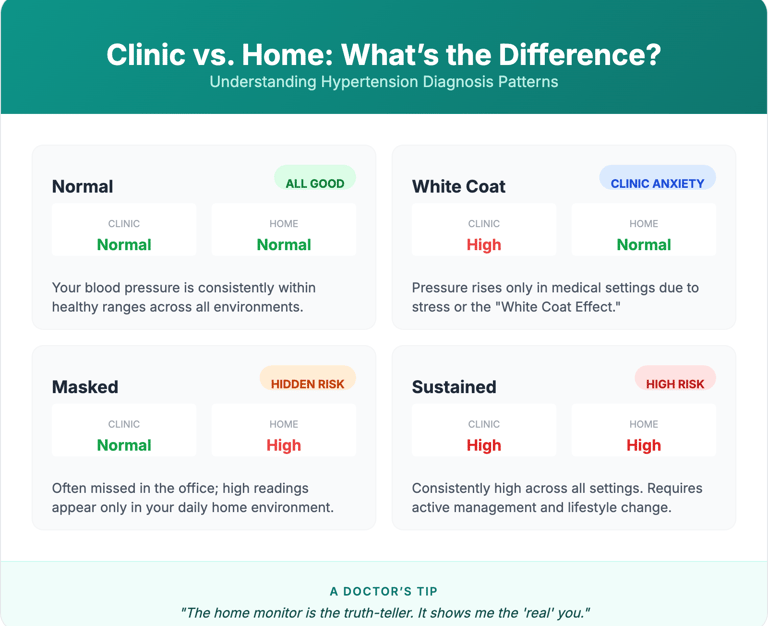
No “white coat effect”: Many people’s BP rises in the hospital due to anxiety — a phenomenon called white coat hypertension.
Reflects true daily levels: Home readings show your real-world BP rather than one-time spikes at the doctor’s office.
Uncovers masked hypertension: Some people have normal BP in the clinic but high BP at home — known as masked hypertension.
Better treatment guidance: Regular home readings help doctors adjust medications and lifestyle interventions more effectively.
Scientific studies published in Hypertension (American Heart Association) show that home BP readings correlate better with 24-hour ambulatory BP (the gold standard) than clinic readings.
⚙️ How to Monitor BP at Home the Right Way
Reliable readings depend on technique. Here’s a practical guide based on AHA/ACC 2025 and European Society of Hypertension (ESH) recommendations:
✅ Step 1: Choose the Right Device
Use an automatic, upper-arm digital BP monitor validated by authorities like AAMI, BHS, or ESH.
Avoid wrist or finger monitors — they are less accurate.
✅ Step 2: Prepare Correctly
No coffee, smoking, or exercise 30 minutes before measuring.
Empty your bladder.
Sit quietly for 5 minutes before measurement.
✅ Step 3: Position Properly
Sit with back supported, feet flat, and arm at heart level.
The cuff should fit snugly on bare skin — not over clothing.
✅ Step 4: Measure Consistently
Take two readings, one minute apart, and average them.
Measure at the same time each day — morning and evening are best.
For diagnosis: record readings twice daily for 7 days, discard day 1, and average the rest.
✅ Step 5: Keep a Record
Use a notebook or mobile app to track readings with date, time, and notes (like missed dose or stress). Many digital monitors automatically sync to health apps.
❤️ What Do the Numbers Mean? (Latest Guidelines)
Blood pressure thresholds have evolved with new evidence.
The 2025 AHA/ACC High Blood Pressure Guideline replaces the older 2017 version and strengthens the role of home and out-of-office BP monitoring in diagnosis and follow-up.
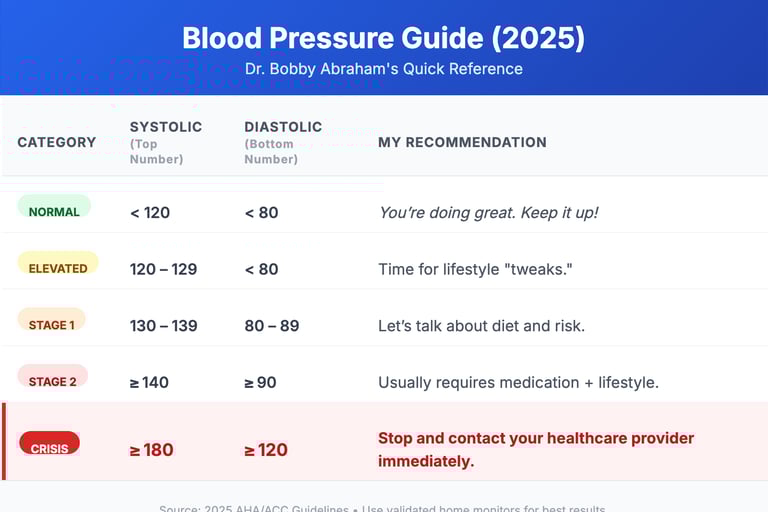
🔹 For home BP readings, an average ≥135/85 mmHg is considered high.
📘 What’s New in the 2025 Update
Home BP Monitoring is Essential:
Out-of-office readings are now mandatory for confirming diagnosis and adjusting treatment.Focus on White Coat and Masked Hypertension:
The guideline emphasizes detecting these patterns using HBPM or ambulatory BP monitoring.Treatment Target:
For most adults, maintain <130/80 mmHg, individualized for elderly or comorbid patients.Health Equity and Access:
Recognizes socioeconomic and racial barriers in achieving BP control and stresses community-based monitoring.
🩸 Understanding “White Coat” and “Masked” Hypertension
🔹 White Coat Hypertension
Seen in 15–30 % of patients with high clinic BP. Though temporary, it’s not entirely harmless — these individuals have a higher chance of developing sustained hypertension later.
🔹 Masked Hypertension
Occurs in 10–20 % of people with normal clinic BP. This hidden form is dangerous because it’s often missed — increasing cardiovascular risk.
Hence, home BP monitoring helps uncover the real picture and guides proper treatment.
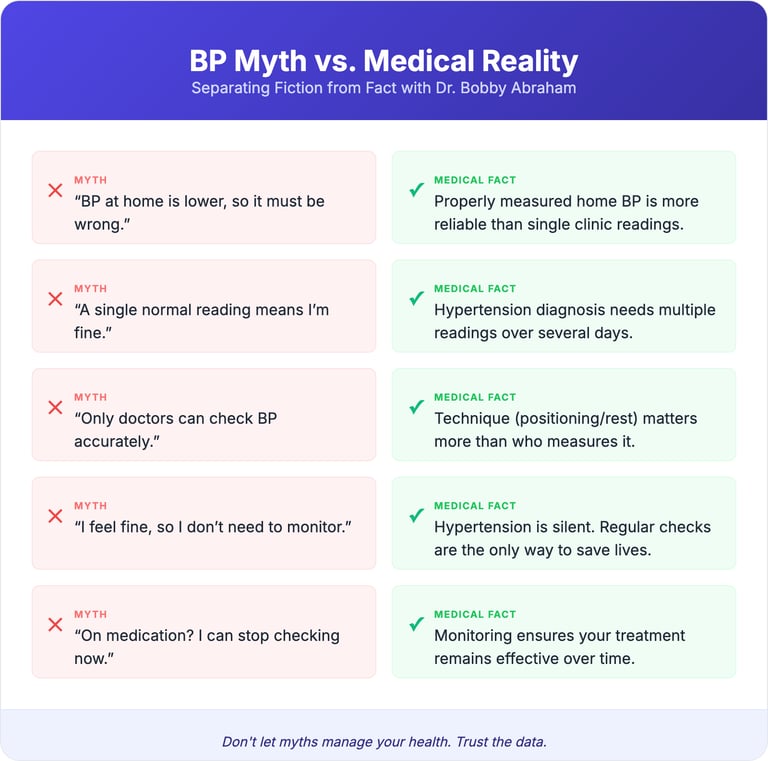
⚖️ Facts and Myths About BP Measurement
💡 How Home BP Monitoring Improves Hypertension Control
1. Empowers You
Tracking your numbers helps you see how diet, exercise, and stress affect your BP.
2. Improves Medication Adherence
Patients who monitor regularly tend to take medicines on time and stay engaged.
3. Detects Early Changes
A sudden rise alerts you and your doctor before complications occur.
4. Fewer Clinic Visits, Better Results
Studies show HBPM with telemedicine or remote review improves BP control and reduces hospital visits.
🌿 The Lifestyle Connection
Home monitoring is most effective when paired with:
Low-salt diet: <5 g/day (≈ 1 tsp).
Regular physical activity: ≥ 30 min most days.
Healthy weight maintenance.
Avoiding smoking and excess alcohol.
Stress management via mindfulness and meditation
Tracking these habits alongside BP trends provides valuable feedback and motivation.
🚨 When to Contact Your Doctor
Seek medical attention if your reading is:
>180/120 mmHg (especially with chest pain, headache, or breathlessness), or
<90/60 mmHg with dizziness or fainting.
Otherwise, share your home BP log with your doctor during follow-ups for better treatment planning.
🧭 Take-Home Message
The 2025 AHA/ACC guideline confirms that home BP monitoring is a cornerstone of modern hypertension care.
It distinguishes between true, white coat, and masked hypertension — ensuring precise treatment.
Consistent monitoring, lifestyle change, and medical guidance together forms the most effective heart-protection strategy.
Monitoring your blood pressure at home isn’t about creating fear — it’s about empowerment.
With the right device and technique, your home BP monitor can be your most trusted daily health companion.
In a world where heart disease remains the leading cause of death, a few minutes a day can truly change — or save — your life.
Health
Care
Mind
contactus@bobbyabraham.com